


The last book of the Bible is generally understood to be the Book of Revelation. Although the Bible is arranged from Genesis to Revelation, the books were not written in that same order. Scripture developed over many centuries, with different authors writing in different historical settings. When people ask what was the last book of the Bible written, they are usually asking about the final book composed in the New Testament period.
Most scholars place Revelation near the end of the first century, commonly around AD 95–96. The author identifies himself as John and describes receiving visions while on Patmos. This makes Revelation a strong candidate for the last book of the Bible written chronologically, although the exact dating of several New Testament books remains debated.
Timeline of New Testament Writings
The last book of the Bible did not appear immediately after the ministry of Jesus. The New Testament writings developed across several decades. Some scholars date James very early, while Paul’s letters generally belong to the middle of the first century. The four Gospels and Acts were written later, followed by writings associated with John and, most likely, Revelation. This timeline helps explain what was the last book of the Bible written rather than simply looking at the order of the books.
A simplified timeline looks like this:
| New Testament Writing | Approximate Date |
| James | AD 40s–60s |
| Paul’s Letters | AD 50s–60s |
| Mark | AD 60s–70s |
| Matthew | AD 70s–90s |
| Luke | AD 70s–90s |
| Acts | AD 70s–90s |
| John | AD 90s |
| Revelation | AD 90s |
Because dates are estimates, scholars do not treat every position as certain. Still, Revelation is widely regarded as the last book of the Bible written, generally around AD 95–96.
Revelation: A Book from Exile
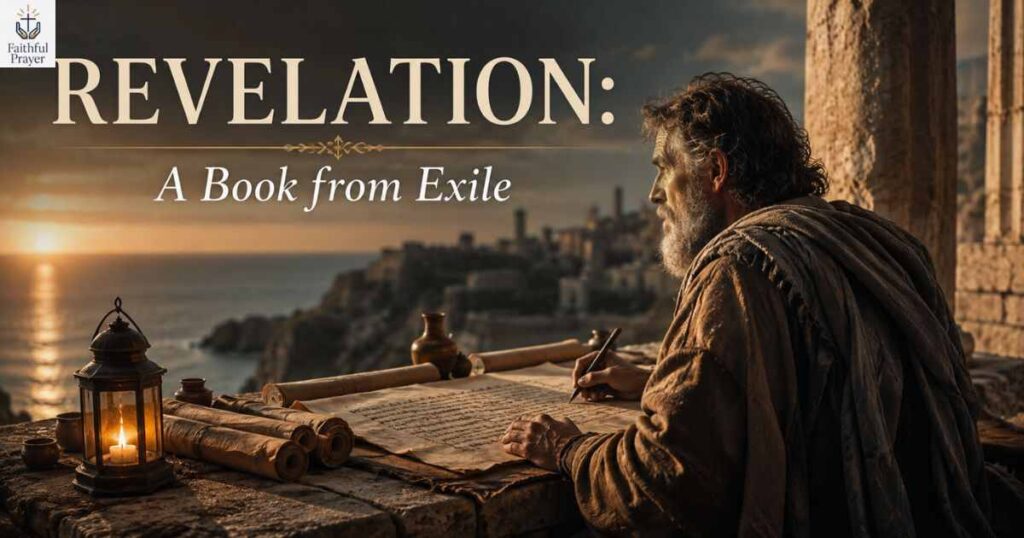
The last book of the Bible presents itself as a revelation received by John. In Revelation 1:9, John says he was on the island of Patmos because of the word of God and the testimony of Jesus. Patmos was associated with Roman exile, giving the book a dramatic setting. Rather than presenting a simple historical narrative, Revelation uses visions, symbols, angels, beasts, heavenly worship, judgment, and promises of restoration.
The setting is important when considering what was the last book of the Bible written. Revelation speaks to seven churches in Asia Minor and addresses suffering, faithfulness, spiritual compromise, judgment, and hope. Its final chapters move toward the defeat of evil, the return of Christ, the judgment of evil, and the vision of a new heaven and new earth.
Why Revelation Is Widely Seen as the Final Book
Several factors support Revelation as the last book of the Bible. Its historical setting fits the closing decades of the first century, and many scholars connect its composition with the period of Roman Emperor Domitian. Its literary character also gives the New Testament a strong sense of completion, ending with promises, warnings, and a final blessing.
Another reason people ask what was the last book of the Bible written is because Revelation appears at the end of the Christian Bible for a meaningful reason. Its themes bring together ideas found throughout Scripture: creation, sin, judgment, redemption, Christ’s victory, resurrection, and God’s future restoration.
Were Any Other Books Written Later?
The dating of the last book of the Bible is not completely settled. Some scholars have proposed later dates for books such as 2 Peter or have debated the final form of certain pastoral letters. The Gospel of John is also sometimes dated close to Revelation. Therefore, saying Revelation was absolutely the final Christian writing requires some qualification.
Even with those debates, Revelation remains the leading answer to what was the last book of the Bible written. Most traditional and scholarly timelines place it in the final decade of the first century, making it later than most other New Testament writings.
Authorship and Theological Significance

The last book of the Bible identifies its author simply as John. Christian tradition has often connected this John with the apostle John, but modern scholarship has debated whether the author was the apostle, John the Elder, or another Christian prophet named John. The book itself focuses more strongly on its message than on providing a detailed biography of its author.
Understanding authorship also helps explain what was the last book of the Bible written. Revelation connects Old Testament imagery with the ministry of Jesus and the future hope of God’s people. It contains letters to seven churches, extensive apocalyptic visions, heavenly scenes, judgment, and a final vision of God’s restored creation.
Read More: Opening Prayer for Worship Services – August 2026
The Canonization Process
The last book of the Bible was not “added” to the Bible immediately after John finished writing it. The writings of the early Christian communities were copied, circulated, read in worship, and gradually recognized as authoritative. The process of identifying the New Testament canon developed over generations rather than happening in one single meeting.
This distinction matters when asking what was the last book of the Bible written. Writing a book and recognizing a book as part of the biblical canon are two different historical events. Revelation was among the books whose status was debated in some early Christian communities, but by the late fourth century it was included in widely recognized New Testament lists. Athanasius included Revelation in his influential list of New Testament books in AD 367.
Why It Matters
Knowing the last book of the Bible helps readers understand why the Bible’s final message has such a distinctive character. Revelation does not simply end with another historical episode. Instead, it points toward the ultimate fulfillment of God’s purposes, including judgment, resurrection, Christ’s victory, and the renewal of creation.
When people investigate what was the last book of the Bible written, they may initially expect a simple date. However, the answer also provides historical context for reading Revelation. Its message was given to Christians facing pressure and uncertainty, while its larger theme is perseverance, hope, faithfulness, and confidence in God’s final victory.
Meaning for Today: Living Between the First and Last Word

The last book of the Bible reminds Christians that biblical history moves toward a promised conclusion. Genesis introduces creation, while Revelation presents a vision of restoration and renewed creation. The Bible therefore begins with a world created by God and closes with God’s people enjoying His presence in a restored creation.
Understanding what was the last book of the Bible written can also encourage modern readers to see Revelation as more than a book of frightening symbols. Its message repeatedly calls God’s people to remain faithful. Revelation presents Christ as victorious and gives hope to believers who experience suffering, opposition, uncertainty, or spiritual struggle.
Last Book of the Bible Old Testament
The last book of the Bible in the Old Testament section is generally Malachi in the standard Protestant ordering. Malachi is the final book of the Old Testament and contains prophetic messages concerning worship, faithfulness, justice, priestly responsibility, and the coming messenger. It prepares readers for themes that continue into the New Testament.
This is different from asking what was the last book of the Bible written. Malachi is the final Old Testament book in the common Christian arrangement, while Revelation is the final New Testament book and is generally considered the final book written. The order of placement does not always indicate the chronological order of composition.
What Is the Main Message of the Book of Revelation
The last book of the Bible centers on God’s sovereignty, Jesus Christ’s victory, judgment against evil, faithfulness among God’s people, and the hope of ultimate restoration. Revelation contains difficult imagery, but its central message is not simply destruction. It reveals a future in which evil does not have the final word and God’s purposes are fulfilled.
When asking what was the last book of the Bible written, it is helpful to understand why Revelation was placed at the end. The book points toward the culmination of biblical themes. It ends with the hope of God’s presence, the defeat of evil, and the promise of Christ’s coming. These themes give the last book of the Bible a fitting conclusion.
Is the Book of Revelation in the Bible
Yes, Revelation is part of the Christian Bible and is the final book in the standard 66-book Protestant Bible. It is also included in Catholic and Eastern Orthodox New Testaments, although Christian traditions differ in their total number and ordering of Old Testament books.
The answer remains the same when someone asks what was the last book of the Bible written: Revelation is generally considered the final written book of the New Testament. Its position at the end of the Bible is therefore both canonical and literary, giving Scripture a concluding vision of Christ’s victory and God’s future restoration.
The 66 Books of the Bible in Order

The last book of the Bible in the standard Protestant Bible is Revelation, number 66. The complete 66-book order begins with Genesis and ends with Revelation. Knowing the order can help readers distinguish between the final book in biblical arrangement and the final book written chronologically.
Here are the 66 books in order:
- Genesis
- Exodus
- Leviticus
- Numbers
- Deuteronomy
- Joshua
- Judges
- Ruth
- 1 Samuel
- 2 Samuel
- 1 Kings
- 2 Kings
- 1 Chronicles
- 2 Chronicles
- Ezra
- Nehemiah
- Esther
- Job
- Psalms
- Proverbs
- Ecclesiastes
- Song of Solomon
- Isaiah
- Jeremiah
- Lamentations
- Ezekiel
- Daniel
- Hosea
- Joel
- Amos
- Obadiah
- Jonah
- Micah
- Nahum
- Habakkuk
- Zephaniah
- Haggai
- Zechariah
- Malachi
- Matthew
- Mark
- Luke
- John
- Acts
- Romans
- 1 Corinthians
- 2 Corinthians
- Galatians
- Ephesians
- Philippians
- Colossians
- 1 Thessalonians
- 2 Thessalonians
- 1 Timothy
- 2 Timothy
- Titus
- Philemon
- Hebrews
- James
- 1 Peter
- 2 Peter
- 1 John
- 2 John
- 3 John
- Jude
- Revelation
This list shows why Revelation is called the last book of the Bible in the standard Protestant canon. It also helps answer what is the last book in the Bible, because Revelation occupies position 66.
When Was the Book of Revelation Added to the Bible
The last book of the Bible was written before the New Testament canon was formally recognized in the form familiar today. Revelation circulated among Christian communities after its composition, but recognition of its canonical status developed over time. Some early Christians accepted it readily, while others expressed reservations.
This is why asking when was the last book of the Bible written is different from asking when Revelation was recognized as Scripture. Revelation is commonly dated around AD 95–96, while broad recognition of the complete New Testament canon became clearer during the fourth century. Athanasius’s AD 367 list is an important milestone in this history.
Last 5 Books of the Bible
The last book of the Bible is Revelation, but the five books immediately preceding it are also easy to identify. In the standard Protestant ordering, the final five are 2 Peter, 1 John, 2 John, 3 John, and Revelation. These books belong to the closing portion of the New Testament and contain themes of faith, Christian conduct, truth, love, perseverance, and hope.
The final five books of the Bible are:
| Order | Book |
| 62 | 1 John |
| 63 | 2 John |
| 64 | 3 John |
| 65 | Jude |
| 66 | Revelation |
More precisely, the final five positions are 1 John, 2 John, 3 John, Jude, and Revelation. This sequence reinforces the answer to what was the last book of the Bible written, while also showing how Revelation functions as the closing book of the Christian Scriptures.
Book of Revelation PDF
The last book of the Bible can be read in many Bible editions, including print and digital formats. Readers looking for a PDF should choose a legitimate Bible edition or digital Bible resource and check its translation and copyright status. Different translations may use different wording while preserving the same biblical text.
If you are studying what was the last book of the Bible written, reading Revelation from beginning to end can provide useful context. The book contains 22 chapters, beginning with messages to seven churches and moving through visions of God’s throne, judgment, Christ’s victory, and the New Jerusalem.
Who Is John That Wrote the Book of Revelation
The last book of the Bible was written by a person named John, according to the book’s own introduction. John describes himself as a servant of Jesus and identifies his location as Patmos. Christian tradition later associated him with the apostle John, one of Jesus’ disciples.
Scholars continue to debate whether the author was the apostle or another early Christian named John. This uncertainty does not change the basic answer to what was the last book of the Bible written. Revelation remains widely regarded as the final book of the New Testament to be composed, and its author presents its message as a revelation concerning Jesus Christ.
FAQs
What happens in Revelation?
Revelation describes visions of judgment, Christ’s victory, and the defeat of evil. It ends with the hope of a new heaven and new earth.
Why did Jesus teach about divorce?
Jesus taught that marriage is a serious covenant that should not be broken casually. His teachings emphasize faithfulness and the seriousness of divorce.
What generation will not pass away?
Jesus said that “this generation” would not pass away until the things He described took place. Christians interpret this statement in different ways.
What is the Bible’s book order?
The standard Protestant Bible begins with Genesis and ends with Revelation. It contains 66 books arranged into Old and New Testament sections.
What are the 73 Bible books?
Catholic Bibles contain 73 books, including seven additional Old Testament books. These include Tobit, Judith, Wisdom, Sirach, Baruch, and 1 and 2 Maccabees.
Conclusion
The last book of the Bible is generally understood to be Revelation, written near the end of the first century, commonly dated around AD 95–96. John identifies himself as the author, and the book describes visions received while he was on Patmos. Although scholars debate the exact dates of several New Testament writings, Revelation remains the strongest and most widely accepted answer to what was the last book of the Bible written.
Understanding the last book of the Bible also means understanding the difference between writing and canonization. Revelation was composed before the New Testament canon was formally recognized, and its acceptance developed over time. Its final position gives the Bible a powerful conclusion centered on Christ’s victory, God’s justice, faithful endurance, and the hope of renewed creation.
