


Anxiety can make everyday life feel difficult, especially when you worry about your future, family, health, or responsibilities. Sometimes, your thoughts keep repeating the same fears, making it hard to relax. Bible verses for peace of mind when you feel anxious can remind you of God’s love, faithfulness, and guidance. Through Scripture, Christians can find encouragement to pray honestly and trust God during uncertainty.
The Bible acknowledges that people experience fear, sorrow, and difficult seasons. It encourages believers to bring their worries to God, remember His promises, and focus on today. These 15 powerful Bible verses from the King James Version (KJV) offer comfort for anxious thoughts, overthinking, and uncertainty. Each passage includes a simple explanation to help you apply its message to everyday life.
Philippians 4:6–7 — Give Your Anxiety to God Through Prayer
Bible verse (KJV):
“Be careful for nothing; but in every thing by prayer and supplication with thanksgiving let your requests be made known unto God.
And the peace of God, which passeth all understanding, shall keep your hearts and minds through Christ Jesus.”
These verses encourage believers to bring their worries to God through prayer instead of allowing fear to control their thoughts. The phrase “Be careful for nothing” means not to be consumed by anxiety. Paul encourages Christians to pray about every concern and remember their blessings with gratitude. This does not mean that problems are unimportant or that difficult feelings should be ignored. Instead, prayer provides a way to express those feelings honestly and seek God’s guidance.
When you feel anxious about family, school, work, or the future, take a quiet moment to tell God what is troubling you. Ask Him for wisdom, patience, and strength to handle the situation. You can also write down your worries and identify one helpful action you can take today. This passage reminds you that faith can offer spiritual comfort even when your circumstances have not changed.
Isaiah 26:3 — Find Peace by Trusting God
Bible verse (KJV):
“Thou wilt keep him in perfect peace, whose mind is stayed on thee: because he trusteth in thee.”
Isaiah 26:3 connects peace with keeping your mind focused on God and trusting His character. The phrase “perfect peace” expresses a deep sense of spiritual reassurance that does not depend entirely on comfortable circumstances. When life becomes uncertain, this verse encourages believers to remember God’s faithfulness instead of allowing every troubling thought to determine how they feel. It offers hope to anyone seeking Bible verses for peace of mind during a stressful season.
You can apply this scripture by reading it slowly whenever your thoughts become overwhelming. Remind yourself that you do not need to know every detail of the future to take your next step. Pray for guidance, consider your choices carefully, and focus on what you can control today. Returning your attention to God’s promises can help you approach difficult situations with greater patience and trust.
Psalm 94:19 — Find Comfort When Your Thoughts Feel Overwhelming
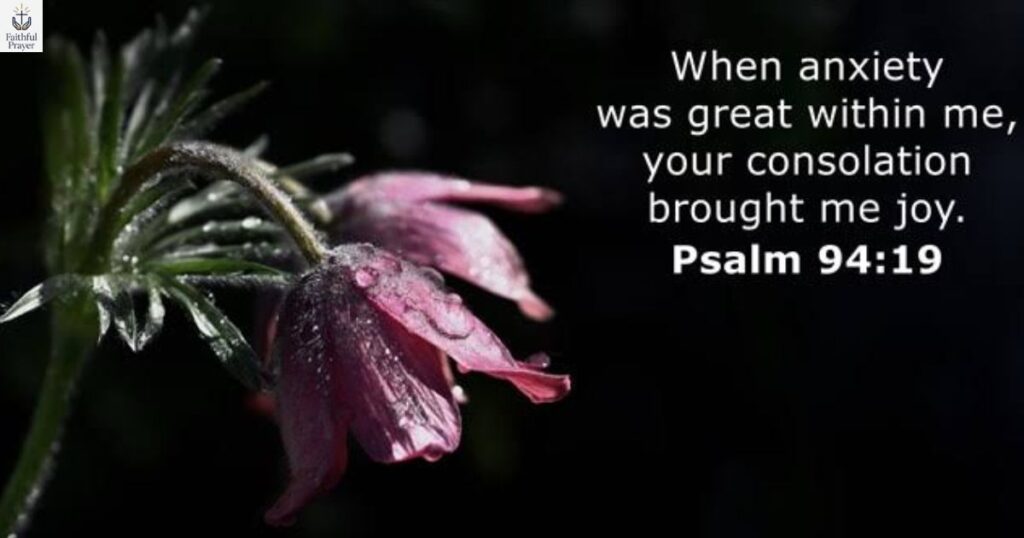
Bible verse (KJV):
“In the multitude of my thoughts within me thy comforts delight my soul.”
Psalm 94:19 speaks to moments when your mind feels crowded with worries and repeated thoughts. You may keep thinking about a difficult conversation, fear a future problem, or struggle to stop imagining negative outcomes. This verse acknowledges the weight of those thoughts while pointing toward the comfort found in God. It reminds readers that they can seek spiritual reassurance without feeling ashamed of their struggles.
When overthinking makes it difficult to relax, pause and read this verse slowly. Tell God what is troubling you, and consider writing your thoughts in a journal to understand them more clearly. Separate the problems you can address from the uncertainties you cannot control. This scripture can remind you to seek God’s comfort while taking small, practical steps toward a calmer and healthier daily routine.
1 Peter 5:7 — Cast All Your Cares Upon God
Bible verse (KJV):
“Casting all your care upon him; for he careth for you.”
First Peter 5:7 reminds Christians that they can bring every concern to God because He cares for them. Sometimes, people carry emotional burdens silently because they do not want to worry their families or friends. This verse offers reassurance that no concern is too small to include in prayer. Whether you are worried about your relationships, responsibilities, or future plans, you can honestly express your feelings to God.
Try turning your worries into a simple prayer whenever you feel overwhelmed. You might ask God to give you patience during a difficult situation or wisdom when you need to make a decision. After praying, consider what practical step could help you move forward. Casting your cares upon God does not mean ignoring your responsibilities; it means remembering that you can seek His strength while dealing with them.
John 14:27 — Receive the Peace Jesus Offers
Bible verse (KJV):
“Peace I leave with you, my peace I give unto you: not as the world giveth, give I unto you. Let not your heart be troubled, neither let it be afraid.”
In John 14:27, Jesus offers His disciples peace as He prepares them for a time of uncertainty. His words remind them that they are not abandoned, even when they cannot control what happens next. The peace Jesus describes is different from temporary comfort that depends on everything going according to plan. For Christians facing fear or emotional distress, this passage offers a reminder to look toward Him for spiritual reassurance.
When anxious thoughts begin to take over, read this verse and reflect on Jesus’ promise of peace. Ask Him to help you respond to your circumstances with patience instead of panic. You may still need to solve problems or make difficult decisions, but you can approach them with prayer and faith. This scripture is also helpful during quiet reflection before bed, when worries about the next day may make it difficult to rest.
Isaiah 41:10 — Remember That God Is With You
Bible verse (KJV):
“Fear thou not; for I am with thee: be not dismayed; for I am thy God: I will strengthen thee; yea, I will help thee; yea, I will uphold thee with the right hand of my righteousness.”
Isaiah 41:10 offers reassurance through its message of God’s presence, strength, and help. When you feel alone during a difficult season, this verse reminds you that your struggles do not mean you have been forgotten. Its words are especially encouraging when you face an unfamiliar situation, a major life change, or a responsibility that seems too difficult to manage. The passage directs your attention toward God’s faithfulness rather than fear alone.
If you feel anxious about an exam, job interview, family concern, or important decision, read this verse before taking your next step. Ask God for courage and wisdom, then focus on one task you can complete today. You might need to prepare carefully, speak with someone you trust, or make a plan. This scripture reminds you that faith can encourage you to move forward even when you do not know exactly how everything will turn out.
Psalm 23:1–4 — Rest in God’s Guidance and Protection

Bible verses (KJV):
“The LORD is my shepherd; I shall not want.”
“He maketh me lie down in green pastures: he leadeth me beside the still waters.”
“He restoreth my soul: he leadeth me in the paths of righteousness for his name’s sake.”
“Yea, though I walk through the valley of the shadow of death, I will fear no evil: for thou art with me; thy rod and thy staff they comfort me.”
Psalm 23 describes God as a shepherd who guides, protects, and cares for His people. David’s imagery of green pastures and still waters offers a picture of rest, while the dark valley acknowledges that life can include painful and frightening experiences. The psalm does not promise a life without difficulties. Instead, it emphasizes God’s presence and guidance through both peaceful and challenging times.
When you worry about what lies ahead, remember the image of a shepherd guiding his sheep one step at a time. You do not need to solve every future problem today. Read Psalm 23 during your morning prayer or before bed, and reflect on the comfort of God’s presence. If you are facing a difficult decision, ask for guidance and seek wise advice so that you can move forward with greater confidence.
Matthew 6:25–34 — Stop Worrying About Tomorrow
Bible verses (KJV):
“Therefore I say unto you, Take no thought for your life, what ye shall eat, or what ye shall drink; nor yet for your body, what ye shall put on.” — Matthew 6:25
“Which of you by taking thought can add one cubit unto his stature?” — Matthew 6:27
“But seek ye first the kingdom of God, and his righteousness; and all these things shall be added unto you.” — Matthew 6:33
“Take therefore no thought for the morrow: for the morrow shall take thought for the things of itself. Sufficient unto the day is the evil thereof.” — Matthew 6:34
In Matthew 6:25–34, Jesus teaches about worry over food, clothing, daily needs, and the future. He points to the birds of the air and the flowers of the field to illustrate God’s care for creation. His message encourages believers not to let uncertainty consume their lives. Rather than spending every moment worrying about tomorrow, Christians are encouraged to seek God’s kingdom and remain attentive to the responsibilities of the present day.
You can apply this teaching by identifying what needs your attention today and what remains uncertain. If you are worried about an exam, prepare for it; if you are concerned about a financial problem, review your options. Taking sensible action is different from repeatedly imagining everything that could go wrong. This passage reminds you that worrying cannot guarantee a better future, but prayer, preparation, and trust can help you face the present more wisely.
Psalm 55:22 — Let God Help You Carry Your Burdens
Bible verse (KJV):
“Cast thy burden upon the LORD, and he shall sustain thee: he shall never suffer the righteous to be moved.”
Psalm 55:22 encourages believers to place their burdens before God and depend on His sustaining care. Emotional pressure can become exhausting when you feel responsible for solving every problem or keeping everyone around you happy. This verse reminds you that you can ask God for strength when your responsibilities feel overwhelming. It offers encouragement without suggesting that every difficulty will disappear immediately.
When you feel weighed down by worries, write down the concerns that occupy your mind and pray about them individually. Ask God to help you recognize which problems require action and which uncertainties you need to release. If you are struggling with a family issue or personal challenge, consider seeking advice from a trustworthy person. Trusting God can help you face your responsibilities without believing that you must carry every burden alone.
Proverbs 3:5–6 — Trust God When You Do Not Have Every Answer
Bible verses (KJV):
“Trust in the LORD with all thine heart; and lean not unto thine own understanding.”
“In all thy ways acknowledge him, and he shall direct thy paths.”
Uncertainty can make even ordinary decisions feel stressful. You may worry about your education, career, relationships, or whether you are choosing the right direction. Proverbs 3:5–6 encourages believers to trust God rather than depending entirely on their limited understanding. The passage does not discourage careful thinking. Instead, it reminds Christians to seek God’s guidance while recognizing that they cannot know everything about the future.
If you are facing a difficult choice, take time to pray and examine your options carefully. Consider the possible consequences, gather reliable information, and ask a wise person for advice when necessary. You may not receive an immediate answer to every question, but you can still make thoughtful decisions based on faith and good judgment. This scripture reminds you that uncertainty does not have to prevent you from taking a responsible next step.
2 Timothy 1:7 — Face Fear With Courage and a Sound Mind

Bible verse (KJV):
“For God hath not given us the spirit of fear; but of power, and of love, and of a sound mind.”
Second Timothy 1:7 encourages believers to remember the qualities of power, love, and a sound mind. Paul wrote to Timothy to strengthen him in his Christian responsibilities, making this verse a message of encouragement during challenging circumstances. It reminds readers that fear does not have to control every decision they make. However, it should not be interpreted as meaning that Christians who experience anxiety have weak faith or have failed spiritually.
When you feel nervous about an important responsibility, reflect on the three qualities in this passage. Ask God for strength to act, love to treat others with kindness, and sound judgment to make wise choices. You may still feel nervous, but you can prepare for the situation and take one step at a time. Courage does not always mean feeling completely fearless; sometimes, it means doing what is right while uncertainty remains.
Joshua 1:9 — Be Strong and Courageous in Difficult Times
Bible verse (KJV):
“Have not I commanded thee? Be strong and of a good courage; be not afraid, neither be thou dismayed: for the LORD thy God is with thee whithersoever thou goest.”
Joshua 1:9 records God’s encouragement to Joshua as he prepared to lead the Israelites after Moses’ death. Joshua faced a significant responsibility, and he needed courage to move forward. The verse reminds readers that God’s presence can provide encouragement during unfamiliar or demanding situations. Its original context concerns Joshua’s leadership, but its message of courage and dependence on God remains meaningful for Christians facing difficult seasons.
If you are starting a new job, preparing for an important event, or facing a major change, read this verse and remind yourself that fear does not have to make your decisions. Break the challenge into manageable steps and seek help when necessary. Pray for strength and wisdom, then focus on what you can do today. This passage encourages you to approach life’s responsibilities with faith instead of allowing uncertainty to keep you from moving forward.
Psalm 46:1–2 — Remember That God Is Your Refuge
Bible verses (KJV):
“God is our refuge and strength, a very present help in trouble.”
“Therefore will not we fear, though the earth be removed, and though the mountains be carried into the midst of the sea.”
Psalm 46 describes God as a refuge and source of strength when life feels unstable. The dramatic picture of mountains moving into the sea represents circumstances that seem capable of shaking everything around us. The psalm reminds believers that God’s faithfulness does not depend on whether life feels predictable or comfortable. Even during difficult seasons, Christians can seek His presence and draw encouragement from His promises.
When unexpected problems or difficult news leave you feeling anxious, pause and read these verses slowly. Pray for strength and consider the practical support you may need to address the situation. You might speak with a trusted friend, contact a family member, or ask for guidance from your church community. This passage reminds you that seeking refuge in God can be part of facing challenges wisely rather than trying to manage every difficulty alone.
Romans 15:13 — Find Hope Through Faith
Bible verse (KJV):
“Now the God of hope fill you with all joy and peace in believing, that ye may abound in hope, through the power of the Holy Ghost.”
Romans 15:13 is a prayer for joy, peace, and hope through faith. Anxiety can sometimes make the future appear entirely negative, especially when you have experienced disappointment or uncertainty. This verse directs your attention toward God as the source of hope. It reminds Christians that hope is not the same as pretending problems do not exist. Instead, it is the confidence to keep trusting God while working through life’s difficulties.
When you feel discouraged, reflect on what still gives you hope and thank God for the support you have received. Ask Him to strengthen your faith and help you recognize the next step you can take. You might need to seek advice, change an unhelpful routine, or give yourself time to recover from a difficult experience. This scripture encourages you to approach the future with hope, even when you cannot predict exactly what will happen.
Lamentations 3:22–24 — Remember God’s Mercy Every Morning

Bible verses (KJV):
“It is of the LORD’S mercy that we are not consumed, because his compassions fail not.”
“They are new every morning: great is thy faithfulness.”
“The LORD is my portion, saith my soul; therefore will I hope in him.”
Lamentations contain expressions of deep sorrow and suffering, yet these verses turn attention toward God’s mercy and faithfulness. Their message is especially meaningful because hope appears in the middle of a book that honestly acknowledges pain. The words “new every morning” remind believers that God’s compassion remains a reason for hope, even when difficult circumstances have not been resolved. A painful season does not mean that every possibility for a better future has disappeared.
When you feel anxious about the next day, remember that you can begin again with prayer, patience, and hope. You do not need to solve every problem overnight or expect yourself to feel better immediately. Instead, choose one helpful action, reflect on God’s faithfulness, and seek support when necessary. This passage can encourage you to face each new morning with renewed trust and the understanding that difficult feelings do not have to define your entire future.
How to Use Bible Verses for Anxiety and Peace of Mind
Reading Bible verses can become a meaningful part of your daily prayer routine. Choose a passage that speaks to your current concerns, read it slowly, and think about how its message applies to your situation. You do not need to memorize all 15 verses at once; even one scripture can give you something encouraging to reflect on throughout the day.
Here are five simple ways to use Scripture when you feel anxious:
- Read one verse in the morning: Start your day with Philippians 4:6–7 or Isaiah 26:3.
- Pray about your worries: Tell God what is troubling you and ask for wisdom, patience, and strength.
- Write down a favorite scripture: Keep it in a journal or somewhere you can read it when you need encouragement.
- Focus on today’s responsibilities: Take one practical step instead of trying to solve every possible future problem.
- Make time for rest and support: Speak with people you trust and maintain healthy daily routines.
Remember that experiencing anxiety does not mean you have failed spiritually. Prayer and Scripture can provide comfort, but persistent or severe anxiety may also require support from a qualified healthcare or mental health professional.
A Short Prayer for Peace of Mind When You Feel Anxious
Heavenly Father, I come before You with the worries and fears in my heart. You know the concerns I struggle to express and the uncertainties that make me feel overwhelmed. Please help me trust Your promises when I cannot see what lies ahead. Give me wisdom for my decisions, strength for my responsibilities, and peace as I place my concerns before You.
Lord, help me release the things I cannot control and face each day with courage and patience. Remind me of Your love when anxious thoughts return, and guide me toward the help and support I need. Teach me to trust Your faithfulness and remain hopeful during difficult seasons. Thank You for hearing my prayers and walking with me through life’s challenges. In Jesus’ name, Amen.
Frequently Asked Questions
What is the best Bible verse for peace of mind when you feel anxious?
Philippians 4:6–7 is a helpful choice because it encourages believers to bring their concerns to God through prayer and thanksgiving. It also describes the peace of God guarding their hearts and minds through Christ Jesus.
Which Bible verse helps with overthinking?
Psalm 94:19 is especially relevant because it describes God’s comfort during times when many thoughts fill the mind. Philippians 4:6–7 is another useful passage for turning worries into prayer.
What does the Bible say about anxiety?
The Bible encourages believers to pray, trust God, seek wisdom, and remember His presence during difficult times. Matthew 6:25–34 teaches about worry over tomorrow, while 1 Peter 5:7 encourages Christians to cast their cares upon God.
Which Bible verses can I read before bed?
Psalm 23, Isaiah 26:3, and John 14:27 are suitable passages for quiet reflection before sleep. You can read one slowly, pray about your concerns, and reflect on its message of trust and peace.
Does anxiety mean that I have weak faith?
No. Experiencing anxiety does not automatically mean your faith is weak. The Bible acknowledges fear and suffering, and seeking spiritual encouragement alongside appropriate professional support can be a helpful response.
Conclusion
Bible verses for peace of mind when you feel anxious can remind you of God’s love, strength, and faithfulness during uncertain times. From Philippians 4:6–7 to Lamentations 3:22–24, these 15 scriptures offer encouragement to pray honestly, trust God’s guidance, and hold on to hope. You do not need to understand every situation or solve every problem at once. Sometimes, the next step is simply to pause, read God’s Word, and seek His help.
As you continue your faith journey, choose one verse that speaks to your heart and return to it whenever you need encouragement. Let Scripture guide your prayers and help you approach each day with patience, wisdom, and courage. Remember that seeking support is not a failure of faith, and you do not have to face every difficulty alone. With prayer, practical steps, and support from others, you can continue moving forward with hope.
