

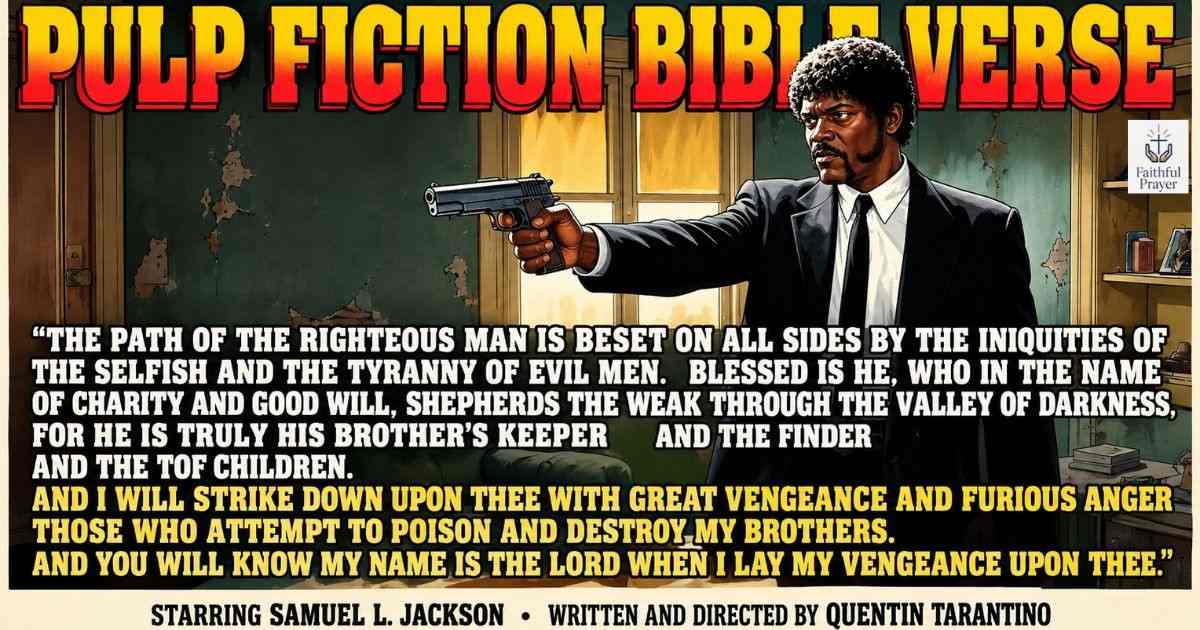
The Pulp Fiction Bible verse is one of the most recognizable movie quotes in modern cinema. In Quentin Tarantino’s 1994 film Pulp Fiction, Jules Winnfield delivers a powerful speech before confronting his enemies. The scene became famous because it combines religious language, intense emotion, and a dramatic performance by Samuel L. Jackson.
Although many people believe Jules is quoting directly from the Bible, the famous speech is actually a creative adaptation inspired by Ezekiel 25:17. The movie version changes the original meaning and uses the verse as a way to explore themes of violence, justice, morality, and personal transformation.
What Is the Pulp Fiction Bible Verse?
The Pulp Fiction Bible verse refers to the famous speech Jules Winnfield recites before confronting Brett and his group in the movie. The speech is introduced as Ezekiel 25:17, creating the impression that Jules is quoting a serious religious warning from scripture.
The quote became famous because it combines powerful words with an intense situation. Instead of simply being a movie line about violence, it represents Jules’ beliefs about justice, punishment, and the role he thinks he plays in the world.
Quick Facts About the Pulp Fiction Bible Verse
| Topic | Information |
| Movie | Pulp Fiction |
| Release Year | 1994 |
| Character Who Quotes It | Jules Winnfield |
| Actor | Samuel L. Jackson |
| Biblical Reference | Ezekiel 25:17 |
| Director | Quentin Tarantino |
| Type of Quote | Fictional adaptation inspired by scripture |
Is the Pulp Fiction Bible Verse Really in the Bible?
The answer is both yes and no. Ezekiel 25:17 is a real Bible verse, but the famous speech from Pulp Fiction is not the exact wording found in the Bible. The filmmakers used the verse as inspiration and changed it to create a dramatic scene that matched the movie’s story.
The original biblical passage has a different meaning and historical background. It appears in a section where Ezekiel delivers messages of judgment against nations that had harmed Israel. The movie changes the focus from divine judgment to personal morality and inner conflict.
Why the Pulp Fiction Bible Verse Became a Cultural Icon
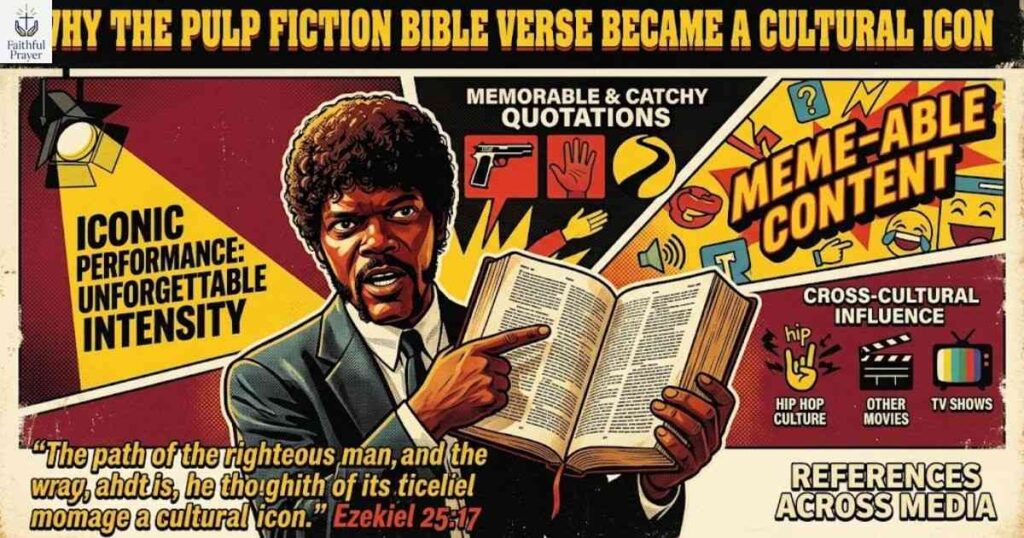
The quote became famous because it combined several powerful elements at once. Samuel L. Jackson’s performance, Quentin Tarantino’s writing style, and the unexpected use of biblical language created a scene that audiences remembered.
The speech has been discussed in movie reviews, film analysis, and popular culture for decades. People continue searching for the Pulp Fiction Bible verse because it represents more than a movie line; it represents a character’s struggle between who he was and who he wants to become.
Movie Version vs Original Bible Verse
The difference between the movie quote and the actual Bible passage is one of the most interesting parts of the discussion. The film uses biblical language but adapts it for storytelling purposes.
| Feature | Movie Version | Bible Version |
| Purpose | Creates a dramatic character moment | Religious message about judgment |
| Speaker | Jules Winnfield | Prophet Ezekiel |
| Main Theme | Justice, violence, transformation | Divine judgment and accountability |
| Context | Crime movie scene | Biblical historical setting |
| Style | Cinematic speech | Religious scripture |
The changes made for Pulp Fiction help audiences understand Jules’ personality. The quote shows how he sees himself before his transformation and how he tries to explain his actions.
The Real Meaning of Ezekiel 25:17
In its original biblical context, Ezekiel 25:17 is connected to the idea that wrongdoing has consequences. The passage is part of Ezekiel’s messages against the Philistines and focuses on judgment from God rather than personal revenge.
The verse does not describe a person taking justice into their own hands. Instead, it reflects a broader religious message about accountability and the consequences of actions.
Read More: Bible Gateway NIV: Read and Study the New International Version Bible Online
Key Themes of the Original Verse
- Judgment for wrongdoing
- Responsibility for actions
- Divine authority
- Consequences of harmful behavior
Why Did Quentin Tarantino Use Ezekiel 25:17?
Quentin Tarantino used the Bible reference because it immediately gives Jules’ speech a serious and powerful feeling. Religious language creates a contrast with the violent world of the movie, making the scene more memorable.
The quote also helps introduce one of the film’s major ideas: whether people can change. Jules begins the movie as someone who accepts violence as part of his life, but later he starts questioning his choices.
How the Bible Verse Connects to Jules Winnfield
Jules Winnfield is not just quoting the verse to scare people. The speech represents his personal philosophy at the beginning of the movie. He believes he understands justice and sees himself as someone carrying out a necessary role.
However, after experiencing a life-changing event, Jules begins to view the world differently. The same words that once represented power become connected to his search for peace and redemption.
Jules Winnfield Character Journey
| Stage | Jules’ Mindset |
| Beginning of Movie | Confident in violence and his lifestyle |
| Middle of Movie | Questions his experiences and beliefs |
| End of Movie | Chooses a different path |
The Role of Religion and Morality in Pulp Fiction
Religion plays an interesting role in Pulp Fiction because the movie does not present simple answers about good and evil. Instead, it explores how people understand morality through their own experiences.
The Bible verse becomes a symbol of Jules’ struggle. He uses religious words while living a violent life, creating a conflict between what he says and what he does.
Why the Pulp Fiction Bible Verse Became Famous
The quote became famous because of several elements working together:
- Samuel L. Jackson’s powerful performance
- Quentin Tarantino’s unique writing style
- The unexpected use of biblical language
- The connection to Jules’ character transformation
The scene is remembered not only because of the words but also because of the way those words affect the story. It shows a character reaching a moment where he must decide who he wants to become.
Cultural Impact of the Pulp Fiction Bible Verse
Since the release of Pulp Fiction, the Ezekiel 25:17 speech has appeared in discussions about famous movie quotes, film analysis, and popular culture. It has become one of the most recognizable examples of a movie using religious references in an unexpected way.
The quote continues to attract attention because it creates questions about justice, morality, and personal change. Even decades after the movie’s release, people still search for the meaning behind the Pulp Fiction Bible verse.
Is the Pulp Fiction Bible Verse Actually From the Bible?
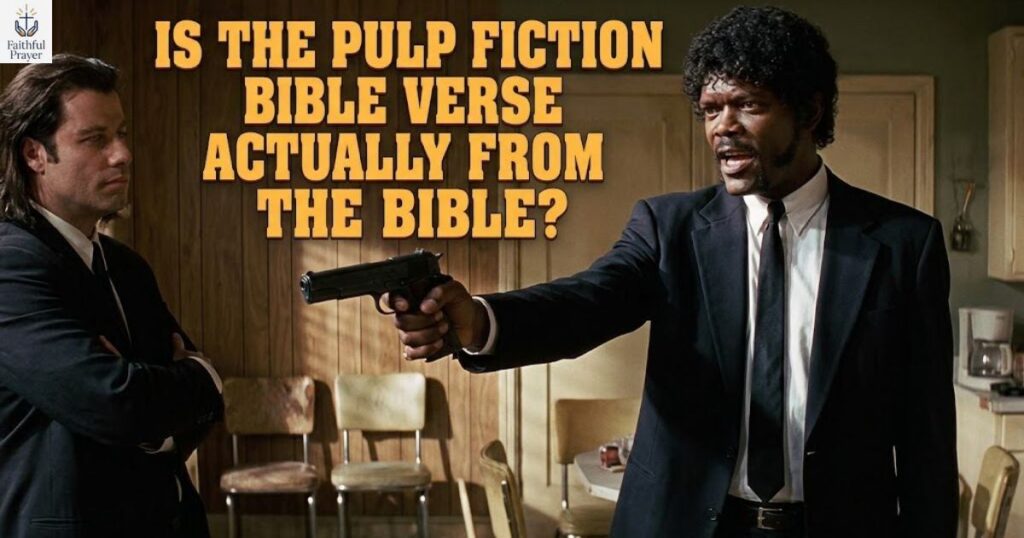
The Pulp Fiction Bible verse is connected to a real Bible reference, but the famous speech from the movie is not an exact Bible quotation. Ezekiel 25:17 is a real verse from the Old Testament, but the wording most people remember from Pulp Fiction was created specifically for the film.
The original biblical passage has a different meaning and historical background. It focuses on judgment and consequences in a religious context, while the movie transforms it into a personal speech about violence, justice, and choices.
The Difference Between the Movie Quote and the Original Scripture
The biggest difference between the movie version and the Bible passage is the purpose behind the words. In the Bible, Ezekiel 25:17 is part of a message about judgment against wrongdoing. It is connected to a larger discussion about responsibility and consequences.
In Pulp Fiction, the quote becomes a reflection of Jules’ personality. The words are used to create fear and authority, but they also reveal his struggle with understanding right and wrong. The movie gives the verse a new meaning connected to personal growth.
The Famous Ezekiel 25:17 Scene in Pulp Fiction Explained
The Ezekiel 25:17 scene in Pulp Fiction is one of the most memorable moments in modern movie history. In the scene, Jules Winnfield enters a tense situation and delivers a dramatic speech before taking action. The serious tone, powerful words, and slow delivery make the moment feel like a traditional religious warning, even though it takes place in a crime setting.
The speech begins with words often associated with the Bible verse Ezekiel 25:17, including the famous line about “the path of the righteous man.” However, the version used in the movie is not a direct quotation from scripture. Quentin Tarantino and the filmmakers adapted the wording to create a deeper connection with Jules’ character and the movie’s themes of morality, justice, and personal change.
How Samuel L. Jackson Made the Bible Verse Iconic
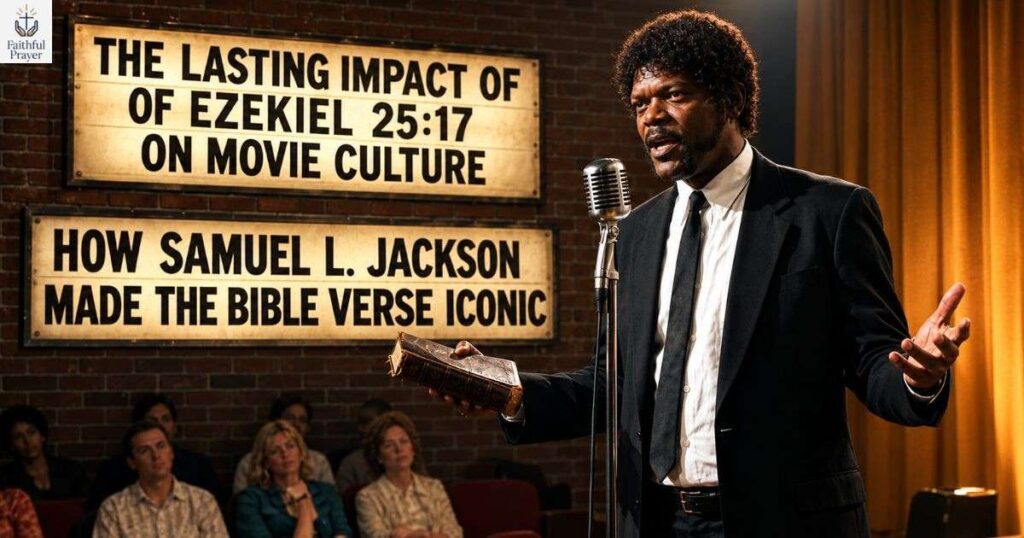
Samuel L. Jackson’s performance as Jules Winnfield played a major role in making the Pulp Fiction Bible verse unforgettable. His calm voice, confident expression, and powerful delivery turned a simple speech into a dramatic cinematic experience. Instead of shouting or showing anger, Jackson delivers the words with control, which makes the scene even more intense.
Jackson’s performance also gave the quote emotional depth. Jules is not just reciting words to intimidate others; he is revealing his beliefs and personality. As the movie progresses, viewers understand that the verse represents Jules’ struggle with his own choices and his desire to find a different path in life.
The Connection Between Faith, Violence, and Redemption in Pulp Fiction
The Pulp Fiction Bible verse creates a strong connection between faith and violence throughout the movie. Jules uses religious language while working in a world filled with crime, creating a contrast between spiritual ideas and violent actions. This contrast makes viewers question whether Jules truly understands justice or whether he is using the verse to justify his behavior.
As Jules’ character develops, the meaning of the verse begins to change. What starts as a speech connected to power and fear becomes connected to redemption and personal growth. The movie uses Jules’ journey to explore the idea that people can reflect on their actions and choose a different direction.
Why People Still Search for the Pulp Fiction Bible Verse Today
People continue searching for the Pulp Fiction Bible verse because the scene remains one of the most recognizable moments in film history. New viewers often discover the quote through movie discussions, online videos, and popular culture references, leading them to explore the real meaning behind Ezekiel 25:17.
Another reason the quote remains popular is that it raises interesting questions about morality, religion, and human choices. Viewers are not only interested in the words themselves but also in how the verse connects to Jules Winnfield’s transformation and the larger message of Pulp Fiction.
The Lasting Impact of Ezekiel 25:17 on Movie Culture

The use of Ezekiel 25:17 in Pulp Fiction changed the way many audiences viewed movie dialogue. The scene showed how a familiar religious reference could be transformed into a powerful storytelling device. It became an example of how filmmakers can use symbolism and language to create memorable characters and moments.
Even decades after the film’s release, the Pulp Fiction Bible verse continues to influence discussions about cinema, character development, and storytelling. The quote remains popular because it represents more than a dramatic speech; it symbolizes the struggle between past actions, personal responsibility, and the possibility of change.
FAQs About the Pulp Fiction Bible Verse
What was the Bible quote from Pulp Fiction?
The quote was a version of Ezekiel 25:17, spoken by Jules Winnfield before a confrontation.The movie version was heavily rewritten and is not the exact Bible wording.It became one of the most memorable scenes because of Jules’ intense delivery and the film’s dramatic style.
Is Ezekiel 25:17 an actual Bible verse?
Yes, Ezekiel 25:17 is a real verse from the Bible.However, the famous speech from Pulp Fiction is mostly a fictional adaptation.The original verse focuses on judgment and God’s vengeance, not the movie’s full speech.
Did Pulp Fiction have a real Bible verse?
The film used a real Bible reference, but the speech itself was created for the movie.It combines biblical ideas with original dialogue written for Jules’ character.The filmmakers changed the wording to fit the story and personality of the character.
Did Hegseth quote Pulp Fiction as a Bible verse?
Pete Hegseth has been reported as referencing the famous Pulp Fiction version of Ezekiel 25:17.The quote is associated with the movie, not an exact biblical passage.The reference shows how the film version became widely recognized in popular culture.
Is Ezekiel 25:17 in Pulp Fiction a real Bible verse?
The verse reference is real, but the famous Pulp Fiction speech is not. The film’s version changes the wording and meaning for dramatic effect. Only the citation comes from the Bible; the iconic speech was written specifically for the movie.
Conclusion
The Pulp Fiction Bible Verse, Ezekiel 25:17, remains one of the most famous movie quotes because of its powerful delivery and connection to Jules Winnfield’s character. While the verse reference comes from the Bible, the speech heard in Pulp Fiction is not an exact biblical passage and was adapted for the film.
The real meaning of Ezekiel 25:17 is different from the movie’s version, focusing on God’s judgment and justice. The film transformed the verse into a memorable reflection on violence, morality, and personal change. Understanding the difference between the original Bible verse and the Pulp Fiction adaptation helps explain why this quote continues to attract attention decades later.
